This website contains affiliate links, and some products are gifted by the brand to test. As an Amazon Associate, I earn from qualified purchases. Some of the content on this website was researched and created with the assistance of AI technology.
Key Takeaways
- Strong, thick stems that support themselves without wire or foam are the single most important beginner-friendly characteristic in any bouquet flower
- Simple bloom shapes, flat faces, single petal layers, and clear focal points, are easier to position and combine than complex layered or asymmetric blooms
- Flowers with longer individual vase lives reduce beginner bouquet pressure: white zinnias, lisianthus, and statice all hold five or more days in cold water
- A pitcher is the best starter vessel for beginner bouquets: the wide mouth allows loose stem placement without a support structure, and the informal vessel suits any arrangement quality
- The one-focal-plus-two-fillers formula gives every beginner bouquet a clear visual hierarchy that reads as designed regardless of arrangement skill level
- Herb greenery, rosemary, basil, and mint, removes the most common beginner obstacle of sourcing specialty florist foliage: it is available at any grocery store
Choosing the best white summer flowers as a beginner bouquet maker is genuinely harder than most tutorials make it look. Every arrangement guide shows you finished results: lush, overflowing, effortlessly beautiful bouquets that look like they took thirty minutes. What those guides rarely explain is that the flowers in those photos were chosen partly for their forgiving qualities. Long sturdy stems that hold their position without support. Simple shapes that look composed at any stem angle. Petals that do not drop when the flower is handled. Selecting flowers with those beginner-friendly characteristics is a design decision that happens before you pick up a single stem.
The white color category makes a useful starting point for beginners because it teaches you about structure and form before introducing the complexity of color pairing. Two white flowers side by side reveal their textural and structural differences with clarity that a mixed-color combination can mask. Learning to see flower form, how petals relate to the center, how stems branch, how the bloom face sits at different viewing angles, is easier in the single-color context. White bouquet practice builds the visual literacy that makes color decisions easier later.
Use this table to choose beginner-friendly white bouquet flowers by the problem they solve. Some flowers stand up straight. Some fill gaps. Some add height. Some make the bouquet look soft even when your spacing is imperfect. Pick one flower from each job and arranging gets much easier.
Best White Summer Flowers for Beginner Bouquet Makers
Pick flowers by the job they do, and your bouquet will feel easier from the first stem.
| Beginner Problem | Best White Summer Flowers | Why They Help | Simple Bouquet Tip |
|---|---|---|---|
| Bouquet keeps floppingThin stems fall outward and lose shape fast. | Zinnias, snapdragons, stockThese give the bouquet a stronger backbone. | They stand up betterStrong stems create structure before you add softer flowers. | Place them firstBuild the base before adding airy blooms. |
| Awkward empty gapsThe bouquet looks unfinished or uneven. | Feverfew, statice, yarrowSmall texture fills space gently. | They hide mistakesFine texture makes uneven spacing look natural. | Scatter lightlyDo not pack filler into thick clumps. |
| No height or movementThe bouquet looks flat from every angle. | Snapdragons, cosmos, salviaTall and airy stems add lift. | They create flowVertical stems make the bouquet feel alive. | Go off-centerA little asymmetry looks more natural. |
| Too round and heavyThe bouquet becomes a tight white ball. | Cosmos, scabiosa, daisiesOpen shapes keep the arrangement breezy. | They add airVisible space between blooms softens the full bouquet. | Let stems breatheLeave gaps instead of filling every inch. |
| Hard to choose flowersToo many choices make arranging feel stressful. | Five-stem formulaZinnia, snapdragon, feverfew, cosmos, herb stems. | Each stem has a jobStructure, height, texture, air, and greenery are covered. | Repeat the formulaUse it until bouquet making feels easy. |
Resources:
- How to Harvest, Condition, and Care for Cut Flowers | Yard and Garden
- Extend the vase life of your fresh flowers with a little care | Flowers, Fruits, and Frass | Illinois Extension | UIUC
- Cut Flower Care – Gardening Solutions
- An Introduction to Cut Flower Production
How to Choose White Summer Flowers with Strong Stems for Beginner Bouquet Makers
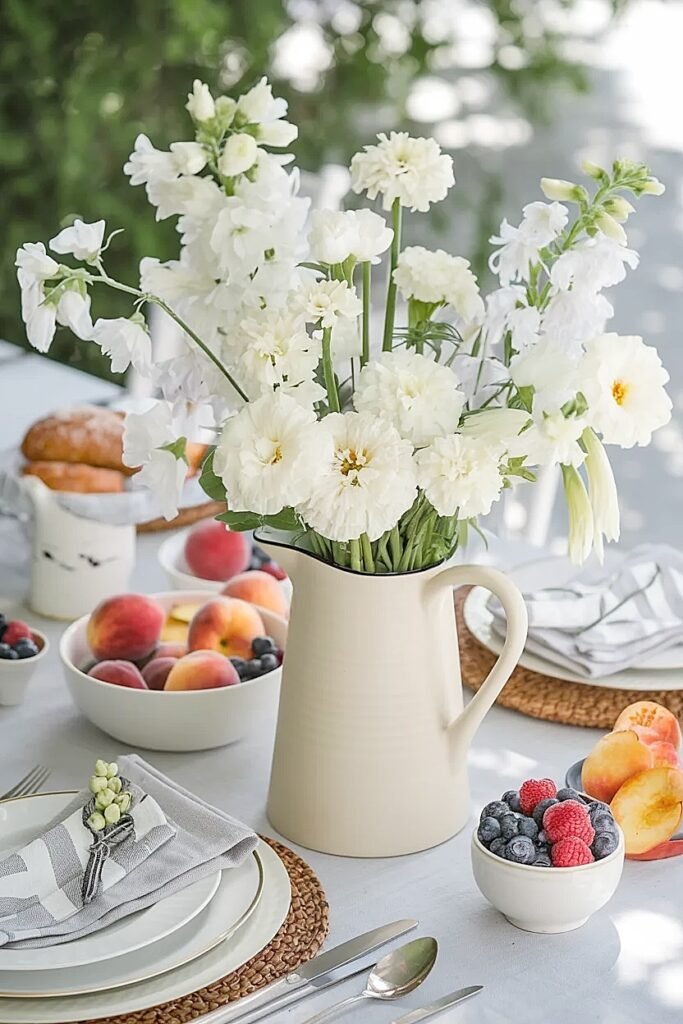
The strongest possible advice I can give a beginner bouquet maker is to start with stem selection before thinking about bloom selection at all. I spent my first two years building arrangements from whatever flowers looked beautiful without asking whether the stems could support what I was asking them to do. Tall, willowy stems that need to be wired upright. Soft, moisture-dependent stems that collapse within hours of cutting. Beautiful flowers on genuinely difficult stems that create frustrating results no matter how carefully you arrange them.
The white flowers with the most reliably strong, self-supporting stems are the ones with woody or semi-woody stem structures: white statice, white lisianthus, white chrysanthemum, and white echinacea. Each of these flowers holds its stem position in a vessel of cold water without leaning, collapsing, or requiring any mechanical support. For a beginner who is learning stem placement and arrangement composition at the same time, this self-supporting quality eliminates a significant layer of difficulty.
Stem length uniformity also matters for beginner bouquets in ways it does not for advanced arrangers. When stems are visually similar in length and thickness, beginner cutting and positioning decisions produce more consistently good results. The most beginner-hostile flowers are those with dramatically uneven natural stem lengths, like some field-grown flowers that come with mixed heights in a single bunch. Choose bunches where the stems are visually similar from the market so your cutting decisions create predictable results.
Water uptake speed is the third stem characteristic worth understanding early. Some cut flowers, particularly those in the daisy family, benefit from an immediate deep water soak of one to two hours after cutting, before being arranged. White chrysanthemums, shasta daisies, and white echinacea all benefit from this initial deep conditioning. Flowers that do not receive adequate initial hydration have stems that appear strong but deliver water inadequately to the bloom, causing premature wilting that looks like an arrangement failure when it is actually a preparation failure.
For more on choosing the right white summer flowers for bouquets including which varieties work best for airy and more structured styles, check out the best white flowers for summer bouquets that feel airy. Share this with any beginner making their first summer bouquets. More ahead on simple bloom shapes, fresh-keeping flowers, and every specific beginner technique.
What Are the Best White Summer Flowers with Simple Shapes for First Bouquets?
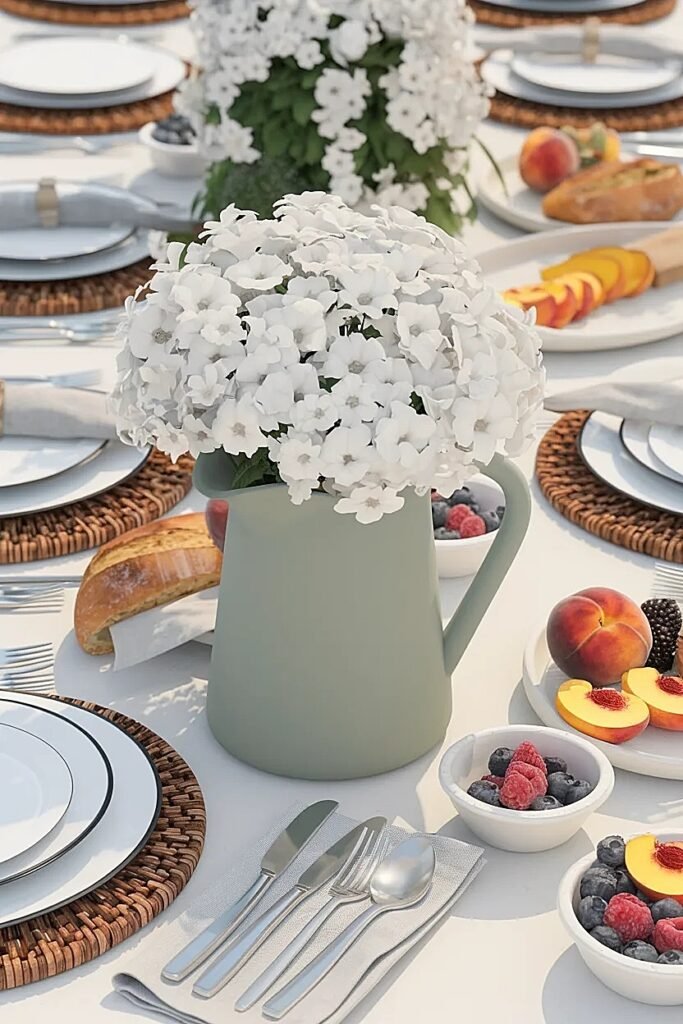
Simple bloom shape is the arrangement quality most directly within a beginner’s control. A flower with a clear, symmetrical bloom face, a single layer of petals arranged around a visible center, looks designed from any angle and at any positioning. A flower with complex, irregular, or asymmetric form requires understanding of its best viewing angle and deliberate positioning to read as intentional. For a beginner learning stem placement at the same time as bloom selection, a simply shaped flower removes one layer of complexity from every arrangement decision.
1. White Shasta Daisy The flat, face-forward white petals and clear yellow center of the shasta daisy create the most beginner-readable bloom shape available in summer. The symmetrical single layer of petals faces outward consistently, which means it looks intentional from any position in an arrangement. Strong hollow stems need a diagonal cut and immediate deep water to hold well. One bunch fills a medium vessel generously at very.
2. White Lisianthus White lisianthus has a layered petal structure that creates visual refinement without the complexity of arrangement skill. The multiple buds per stem open progressively, which means one purchase provides several days of fresh bloom appearance. The cool white variety creates the crispest white focal presence available. The upright, somewhat rigid stem structure is genuinely forgiving for beginners: the stems naturally position themselves at useful angles.
3. White Gerbera Daisy The bold, overscaled flat face of white gerbera daisies creates the most graphic, most visually clear bloom shape in any beginner-friendly summer arrangement. The single ring of petals around a clear central disc creates an uncomplicated circular form that reads as designed at any viewing angle. Hollow stems require a floral wire insert or very shallow water to avoid stem collapse: this is the one.
4. White Statice White statice does not have a single showy bloom face but instead creates simple, distributed visual texture through clusters of tiny papery flowers. For a beginner, this distributed texture is extremely forgiving: there is no wrong placement angle for statice because its visual contribution is cumulative rather than directional. One bunch provides filler and structural support for multiple beginner arrangements at very low cost. Holds.
5. White Marguerite Daisy Marguerite daisies create a smaller-scale version of the shasta daisy’s simple face-forward form, with a branching stem structure that produces multiple bloom heads per stem. The branching habit means one stem does the visual work of three to four single-headed flowers, creating fuller-looking arrangements from fewer stems. The compact single-petal daisy face is as beginner-readable as any flower available in summer: it looks designed from.
More ahead on which white summer flowers stay fresh longest, which directly reduces the time pressure that makes beginner arranging feel stressful.
How to Pick White Summer Flowers That Stay Fresh Longer for New Bouquet Makers
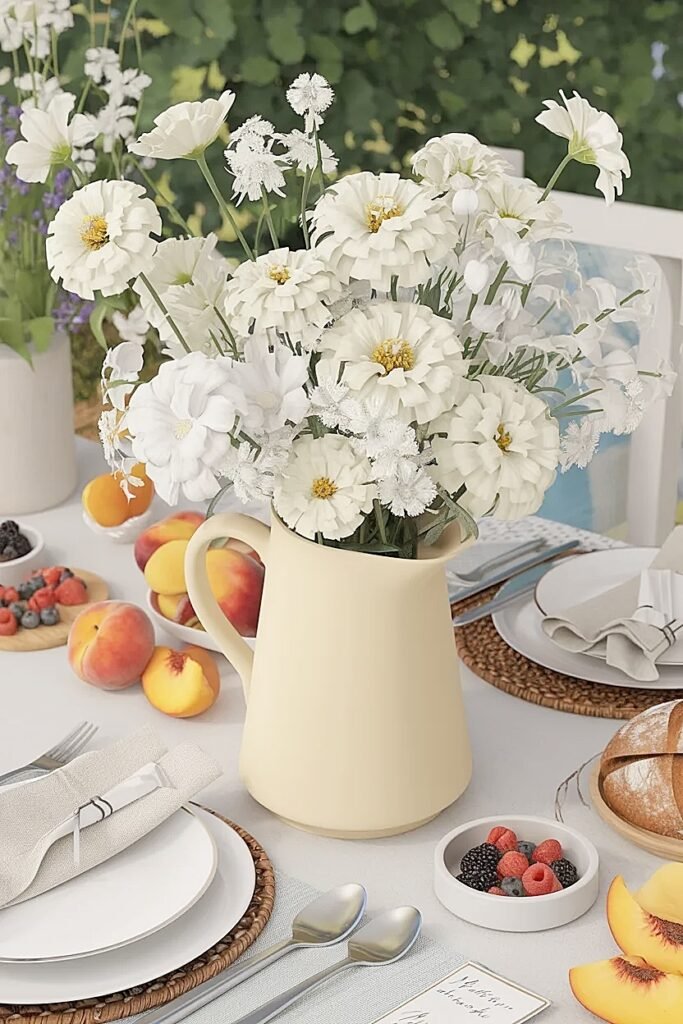
Fresh-keeping duration in cut flowers is a specific, measurable characteristic that varies widely across species and even across varieties within the same species. White zinnias typically hold five to seven days in cold water with stem re-cuts every two days. White statice holds ten or more days and continues looking presentable as it gently dries. White chrysanthemums hold ten to fourteen days with regular cold water changes. White lisianthus holds seven to ten days as the multiple buds on each stem open progressively.
For a beginner, this fresh-keeping characteristic is practically more important than bloom beauty. An arrangement that looks beautiful for two days and then collapses requires remake or replacement at the point when a beginner is least likely to feel motivated to start over. An arrangement that looks good for eight to ten days with minimal maintenance teaches the arrangement skills that build confidence rather than frustration.
The single most important fresh-keeping practice for beginner arrangements is cold water management. Fill the vessel with the coldest available tap water immediately before placing the flowers. Change the water every two days, trimming half an inch from each stem at a diagonal with each water change. This practice dramatically extends the life of every white flower on the list above, and it costs nothing beyond a few minutes of maintenance every other day.
Avoid placing beginner arrangements near heat sources: direct sunlight, heating vents, or beside appliances that generate warmth all accelerate the decline of cut flowers. The ideal placement for a beginner’s white summer arrangement is a cool, bright interior position away from direct sun. A kitchen counter away from the stove or a windowsill without direct afternoon exposure are reliable positions for maximum arrangement longevity.
There is more ahead on the pitcher format specifically, which is the most forgiving vessel for beginner arrangement placement.
What Are the Best White Summer Flowers for Small Starter Bouquets in Pitchers?
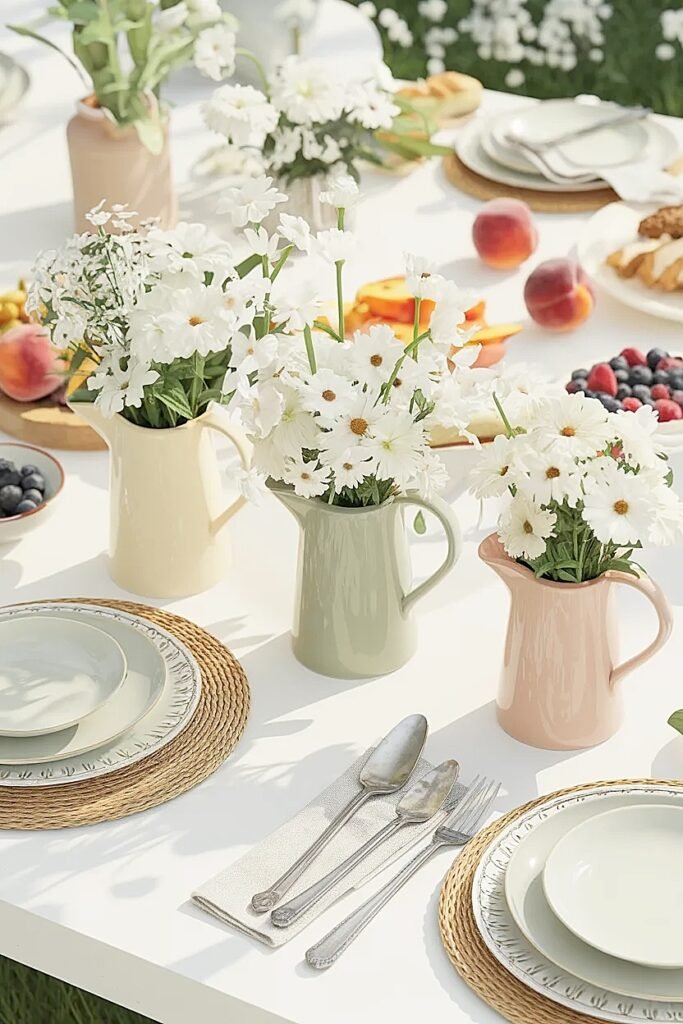
1. White Zinnias Zinnias in a pitcher need no arrangement skill at all. Cut stems to varying heights, two to four inches different, and place them loosely in the pitcher. The flat bloom faces orient themselves toward the available light, which creates a naturally varied display without deliberate.
2. White Chrysanthemums White chrysanthemums create generous, full-looking pitcher arrangements with very few stems because each stem carries multiple branching bloom heads. The branching form fills the pitcher width naturally. The long vase life of ten to fourteen days in cold water makes chrysanthemums the best investment per.
3. White Statice Statice in a pitcher creates a distributed white texture that suits the informal pitcher aesthetic better than formal focal flowers. Three to four statice stems fill a small pitcher with papery white cluster blooms that look complete without any additional flowers. The very long vase.
4. White Echinacea (Coneflower) White echinacea’s upright stems and distinctive center cone structure creates a bold, architectural pitcher arrangement that looks intentional with as few as three stems. The stem naturally holds itself upright in a pitcher without leaning. The center cone, which rises above the reflexed petals, adds.
5. White Phlox White phlox in a pitcher creates fragrant, cottage-style arrangements that require no arrangement skill beyond stem length variety. The flat-topped flower clusters fill the pitcher naturally. The sweet fragrance from phlox at a kitchen or dining table creates a sensory presence that purely visual flowers.
More ahead on the one-focal-flower-plus-two-fillers formula, the single most useful structure for beginner bouquet building.
DIY Ideas for White Summer Flowers Bouquets with One Focal Flower and Two Fillers
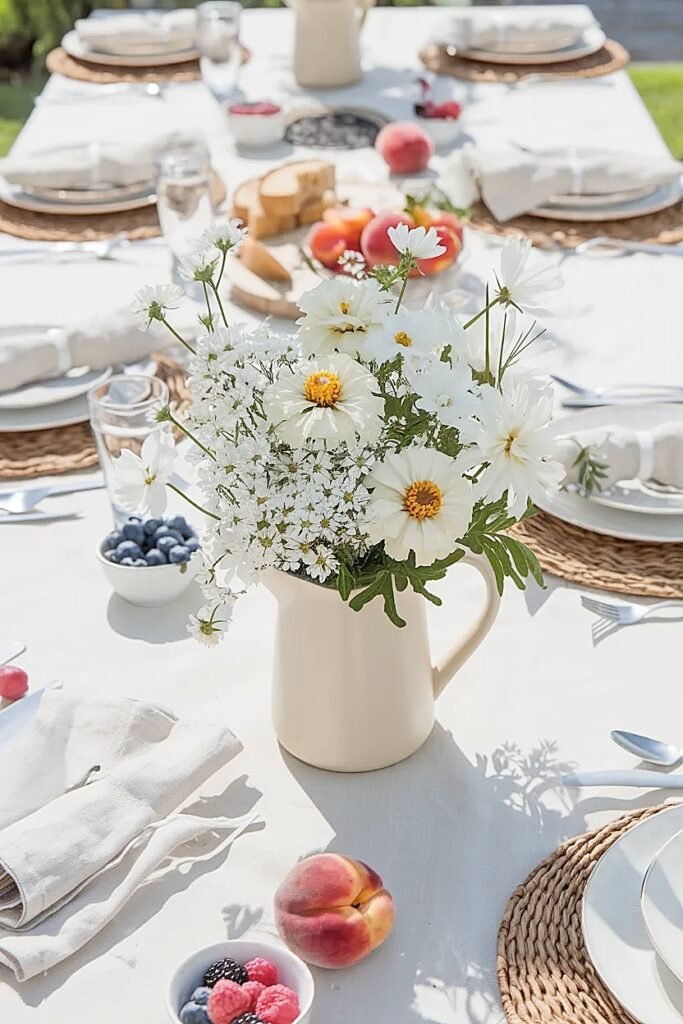
The one-focal-plus-two-fillers formula works because it creates visual hierarchy without requiring arrangement expertise. The focal flower is the largest or most visually distinctive bloom. The first filler adds a complementary texture at medium scale. The second filler adds fine texture or trailing quality at small scale. Three roles, three flower types, one clear visual result.
1. White Gerbera Daisy with Waxflower and Rosemary White gerbera daisies as the bold graphic focal element, white waxflower as the fine-textured supporting filler, and rosemary sprigs as the aromatic structural greenery. The three elements cover graphic focal, fine texture, and fragrant structure simultaneously. One to three gerbera stems, three waxflower stems, and.
2. White Lisianthus with Gypsophila and Eucalyptus White lisianthus as the refined layered-petal focal, baby’s breath as the mist filler, and seeded eucalyptus as the silver-green trailing support. The combination covers all three structural roles with materials available at most grocery stores. Two lisianthus stems, two baby’s breath stems, and two eucalyptus.
3. White Zinnia with Statice and Basil White zinnia as the bold flat-faced focal, white statice as the papery texture filler, and fresh basil as the fragrant dark-green support. The basil adds a culinary-garden fragrance that no ornamental greenery provides at the same intimacy. Three zinnia stems, two statice stems, and four.
4. White Shasta Daisy with Chamomile and Mint Shasta daisy as the clear-faced beginner-friendly focal, fresh chamomile as the small-daisy secondary filler, and mint sprigs as the fragrant cooling greenery. The three elements are all available as cut flowers or garden herbs throughout summer. The honey fragrance of chamomile and the fresh mint.
5. White Phlox with Feverfew and Italian Parsley White phlox as the fragrant cluster focal, feverfew as the button-bloom supporting filler, and Italian parsley as the dark-green structural greenery. All three are available as grocery store purchases or garden cuttings. The phlox fragrance and feverfew’s herbal note combine as a cottage-garden scent. Four.
More ahead on daisy-faced white flowers specifically, which are the most consistently successful bloom type for beginner arrangement quality.
How to Use White Summer Flowers with Daisy Faces for Beginner-Friendly Shape
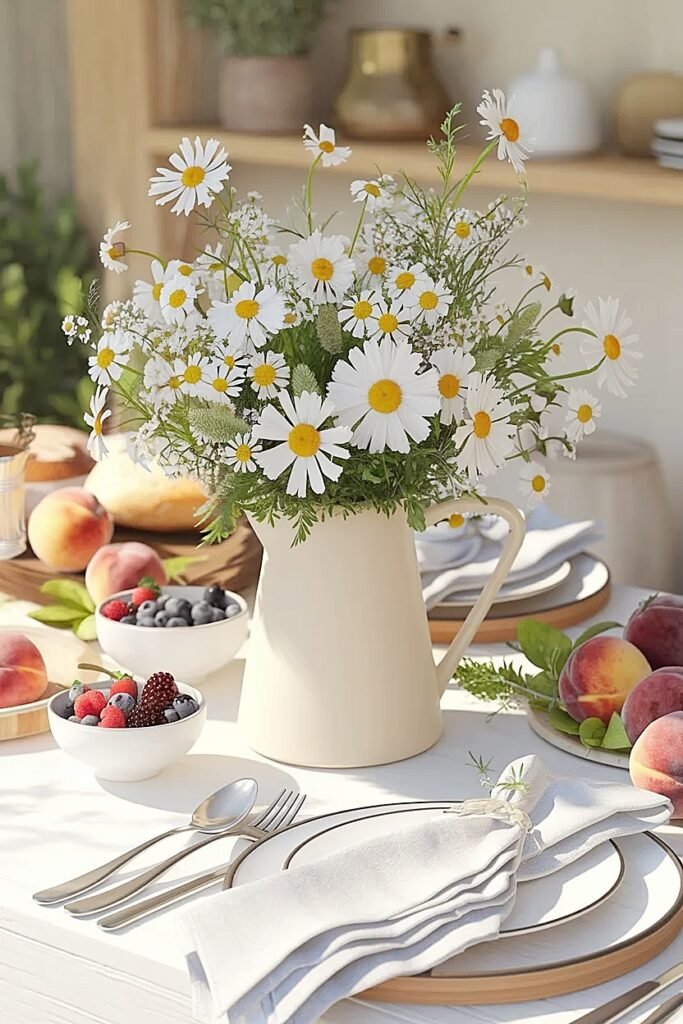
The daisy face, a single ring or two rings of flat petals arranged symmetrically around a visible central disc, is the most beginner-friendly bloom shape in flower design. The symmetry means it reads as intentional from any viewing angle. The flat-faced orientation means the bloom naturally presents itself toward the viewer when positioned in a vessel without deliberate directional placement. And the visible contrast between the white petals and the center disc creates an inherent visual interest that monochromatic layered flowers require deliberate positioning to achieve.
White shasta daisies, white gerbera daisies, white marguerite daisies, white echinacea, and white oxeye daisy all share this daisy structure at different scales. Shasta and gerbera are the largest-faced options and create the most graphic, most immediately visible focal presence in a mixed arrangement. Marguerite and chamomile are the small-faced options and create the fine-textured supporting quality that balances a single large-faced focal. Echinacea adds a three-dimensional center cone that none of the flat-faced daisy types can replicate.
The daisy-face arrangement principle that most helps beginners: mix two different sizes of daisy-face flowers in the same bouquet for instant scale hierarchy. Three white shasta daisies plus a handful of white chamomile in the same pitcher creates a natural size hierarchy where the large shasta faces read as the focal element and the small chamomile faces read as the supporting texture. No arrangement technique required. The size difference does all the compositional work automatically.
One daisy-specific management detail worth knowing: most daisy-family flowers benefit from removing the lower leaves that would otherwise sit in the vessel water. Submerged leaves cause bacterial growth that shortens vase life significantly. Strip all leaves from the bottom half of the stem before placing in water. This simple preparation step dramatically extends the life of shasta daisies, gerberas, and chamomile in beginner arrangements.
Ways to Mix White Summer Flowers with Herbs for Easy Beginner Greenery
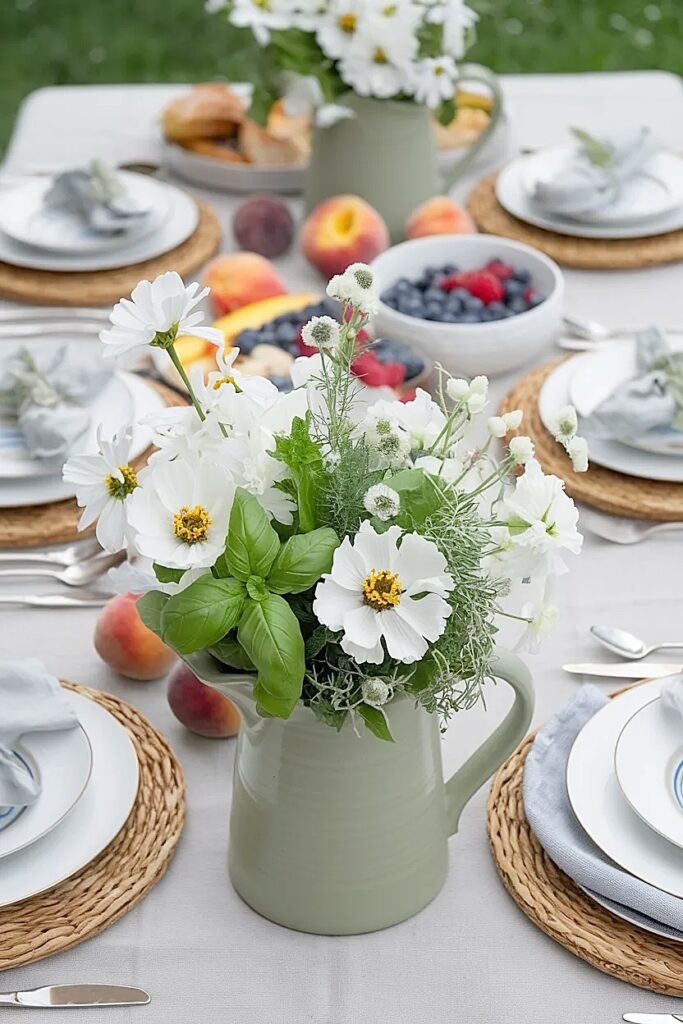
1. White Zinnias with Rosemary Rosemary’s needle-like silver-green foliage creates fine-textured, structural support for white zinnia stems. The rosemary fragrance at close range is clean and pleasant. No floral prep required: simply cut rosemary from the garden or grocery store, strip the lowest inch of needles, and place in cold.
2. White Daisies with Fresh Basil Basil’s dark, aromatic leaves create the strongest visual contrast of any herb against white blooms. The basil fragrance adds a distinctive Italian-garden dimension to a simple white daisy bouquet. Keep basil stems in cool water and use immediately: basil wilts faster than most herbs. The.
3. White Cosmos with Dill Fronds Dill’s feathery yellow-green fronds create the finest-textured herb greenery for any arrangement. The airy frond quality specifically complements white cosmos’s own delicate, fine-stemmed character. The anise fragrance is gentle and food-compatible. Cut dill fronds to similar lengths as the cosmos stems and place loosely in.
4. White Lisianthus with Mint Sprigs Mint’s dense, round-leafed stems create contrasting dark-green mass alongside white lisianthus’s refined blooms. The sharp mint fragrance creates immediate sensory impact at table range. Use spearmint or peppermint rather than the more pungent chocolate mint varieties for dining arrangements. The mint stem vigour supports lisianthus.
5. White Phlox with Lemon Verbena Lemon verbena’s citrus fragrance alongside phlox’s sweet floral scent creates a layered fragrance experience that no purely ornamental greenery produces. The narrow, bright-green verbena leaves add a different leaf texture from rounder herb foliage. Cut lemon verbena stems to slightly longer than the phlox stems.
Conclusion
The best white summer flowers for beginner bouquet makers share three qualities that most flower guides do not specifically address: structurally strong self-supporting stems, simple symmetrical bloom shapes that look composed at any angle, and enough vase life to allow the beginner to learn from the arrangement over several days rather than watching it decline before the lesson is finished.
Start with white zinnias in a pitcher with two rosemary sprigs. One flower, one herb, one vessel. Get that single combination right and every more complex combination builds naturally from the visual and practical understanding that simple starting point creates.
This website contains affiliate links, and some products are gifted by the brand to test. As an Amazon Associate, I earn from qualified purchases. Some of the content on this website was researched and created with the assistance of AI technology.